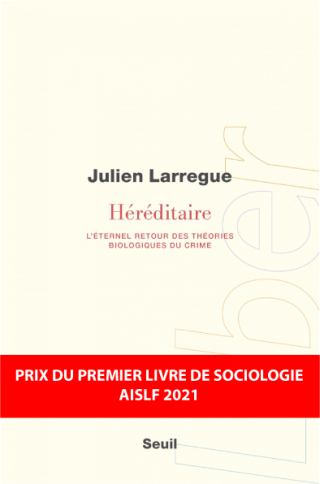
Hereditary
The Persistence of Biological Theories of Crime
Since the 1990s, a growing number of criminal courts around the world have been using expert assessments based on behavioral genetics and neuroscience to evaluate the responsibility and dangerousness of offenders. Despite this rapid circulation, however, we still know very little about the scientific knowledge underlying these expert evaluations.
Hereditary traces the historical development of biosocial criminology in the United States from the 1960s to the present, showing how the fate of this movement is intimately linked to that of the field of criminology as a whole. In claiming to identify the biological and environmental causes of so-called "antisocial" behaviors, biosocial criminologists are redefining the boundary between the normal and the pathological.
The book examines what is at stake in the development of biosocial criminology. Beyond the origins of delinquency, Larregue addresses the reconfiguration of expertise in contemporary societies, and in particular the territorial struggles between the medical and legal professions. For if the causes of crime are both biological and social, its treatment may call for medical as well as legal solutions.
"Biological theories of 'antisocial behavior' have made a stunning comeback in scholarship and insinuated themselves in the criminal courts. Hereditary delves deep into their academic and intellectual histories to tell us how and why. It is an absolute must-read for reflexive criminologists, sociologists of knowledge and anthropologists of crime and expertise."
— Loïc Wacquant, Professor at UC Berkeley
"Well-crafted and accessible, [Hereditary] appeals to readers within and beyond sociology, making it highly recommended for those interested in criminology and sociology of science."
— Man-Kit Lei, Social Forces
"Larregue's analysis of biosocial criminology can be applied to any area of study and it will make one consider or reconsider the structures, but also the trends, conducive to obtaining academic markers of success."
— Laura Bui, The British Journal of Criminology
"Hereditary is a fantastic and... convincing analysis, a tour de force of data collection for a field analysis of an academic space."
— Aaron Panofsky, American Journal of Sociology

“Julien Larrègue provides a highly insightful analysis of the reasons behind this ‘eternal return’ of biological explanations of crime in the United States, as well as in Europe, where an increasing number of courts today call upon genetic expertise in criminal trials.”
— Gilles Bastin, Le Monde
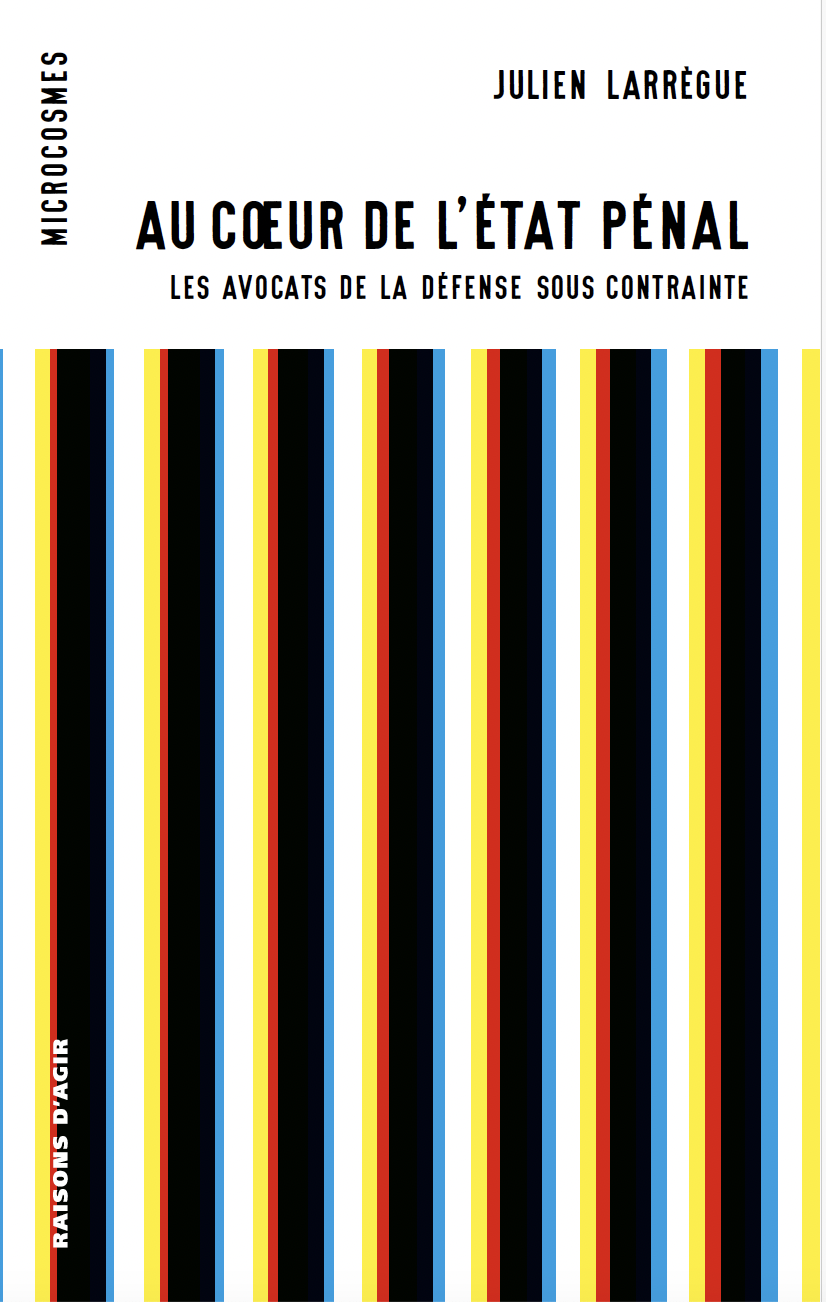
Les avocats de la défense sous contrainte
Judges and political leaders turning against defense lawyers, overcrowded prisons, legal principles under assault: how can defense rights, which have never been so extensive, nonetheless appear so deeply threatened?
Conducted in Marseille, a city often portrayed as the “crime capital” and the epicenter of drug trafficking in France, this investigation plunges readers into the everyday world of criminal defense lawyers. Through close attention to court hearings, law offices, and relations with judges and clients, the book highlights the fragilities, contradictions, and limits of criminal defense in a context of punitive escalation.
Is the defense destined to become an accomplice of the penal state? Through the voices and experiences of those who practice it on a daily basis, this book questions the role of the lawyer and what remains, today, of the rights of the defense.